Relocating a motor yacht or sailing vessel overland between European cruising grounds—such as the Solent to the Balearic Sea, or the Baltic to the Adriatic—condenses weeks of offshore motoring into days. However, the operational success of the journey rests on synchronizing two separate harbor ecosystems, each operating under distinct tides, crane schedules, and administrative protocols.
Comparing Transit Contexts
Not every boat transport begins or concludes at a commercial marina basin. Operational demands change significantly depending on the facilities involved at both ends:
| Origin / Destination | Core Logistics Requirement | Primary Risk Factor |
|---|---|---|
| Marina to Marina | Dual travel-lift bookings and synchronized splash slot | Road delays causing missed crane booking windows |
| Marina to Winter Yard | Transfer to yard cradle blocks on hardstanding | Ground surface too soft for heavy transport jacks |
| Marina to Refit Facility | Sequenced unrigging and hardware inventory staging | Missing spar brackets during disassembly |
| Private Yard to Marina | Mobile boom crane and restricted access clearance | Narrow rural lanes preventing articulated turning |
Departure Marina: Staging & Lift Bay Etiquette
At the origin port, assuming the harbor hoist will lift your vessel the instant the transporter arrives is a common mistake. Travel-lift wells are shared harbor infrastructure with tight daily rotations. Any haul-out delay or hull pressure-washing bottleneck impacts driver operating hours before highway transit begins.
Key departure protocols include:
- The Hoist Window: Booking haul-out at least two to three hours before the road haulier arrives to allow for power-washing, sling inspection, and hull drying.
- Sling Location Markers: Clearly tagging lift points with waterproof tape so crane slings and trailer cradle pads do not compress propeller shafts, depth sounders, or sail drive boots.
- Administrative Clearance: Settling berth accounts, yard fees, and electricity meters in advance so the harbor master releases the departure gate pass without delays.
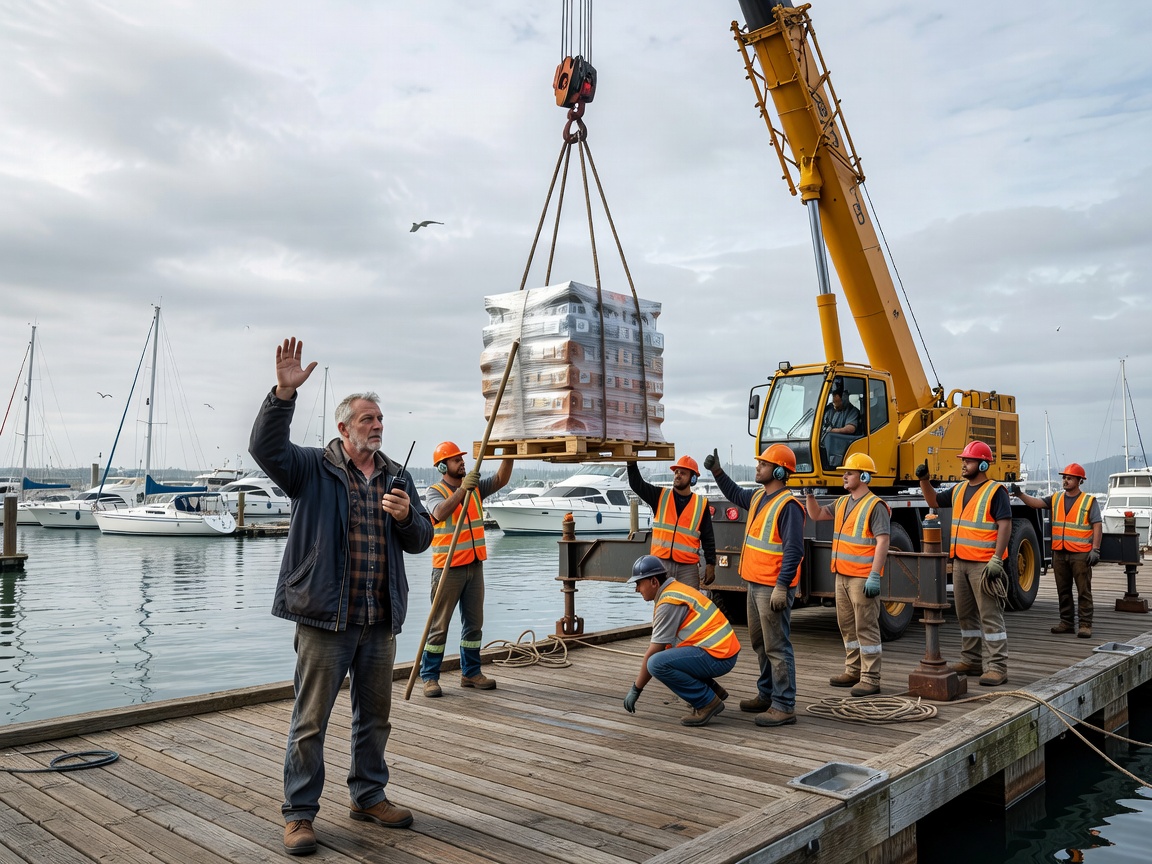
Coordinating Lift Slots
Confirm whether the destination port allows direct splashdown from the transport trailer or requires temporary hardstanding blocking prior to launch.
Arrival Marina: Berth Allocation & Splashdown
Rolling into a European destination port without a pre-confirmed wet berth or designated dry storage footprint creates immediate confusion. Large tractor-trailer combinations cannot idle indefinitely in marina parking zones designed for passenger vehicles.
Crucial destination checks include:
- Hoist Well Water Depth: Confirming low astronomical tides will not ground the boat or prevent it from floating clear of crane slings during launch.
- Lay-By Berth Reservation: Securing an adjacent temporary pontoon with shore power and water for immediate post-launch engine checks and systems commissioning.
- Specialist Riggers: When unstepped spars are delivered on deck, arranging for a spar crane or yard rigging crew to re-step the mast avoids cluttering the dock apron.
Contingency Planning for Long-Haul Moves
Cross-continental transits are vulnerable to Alpine snow restrictions, highway toll bottlenecks, and ferry schedule alterations. Sound marina-to-marina planning builds in a 24-hour buffer window at the arrival harbor, ensuring the yard can safely block the vessel on temporary stands if delivery occurs outside crane operating hours.
Direct Yard Communication
Always provide the transport carrier with the direct mobile phone number of the departure lift supervisor and the destination dockmaster. Relying solely on general harbor office emails can lead to miscommunications when transit timing shifts on the road.