It is tempting to view continental Europe as a seamless transit corridor under the single market. While standard freight vehicles traverse borders effortlessly, transporting an abnormal load—such as a 3.5-meter-beam motor cruiser or a deep-keel sailing yacht—involves an intricate patchwork of national road regulations, regional notifications, and infrastructure constraints.
Understanding Abnormal Load Classifications
A vessel on a trailer exceeding standard European road dimensions (generally 2.55 meters in width, 4.0 meters in overall height, and 16.5 to 18.75 meters in vehicle combination length) falls under abnormal load legislation (Convoi Exceptionnel in France, Schwertransport in Germany, Transporto Eccezionale in Italy).
Critically, regulatory thresholds diverge markedly between neighboring jurisdictions:
- Width Variations: In some countries, widths between 2.55 m and 3.0 m can move under standing annual general permits during daylight hours. Once a beam reaches 3.01 m or wider, specific point-to-point route authorization and private escort pilot vehicles (voiture pilote / Begleitfahrzeug) often become mandatory.
- Height Clearances: While the UK motorway network frequently provides bridge clearances of 4.8 to 5.0 meters, motorways in France, Spain, and Germany routinely encounter overpasses and overhead directional signage with 4.2 to 4.5-meter limits, making trailer bed drop crucial.
- Weekend & Holiday Restrictions: Strict driving bans for abnormal freight operate across Germany, Austria, and France from Saturday afternoon through Sunday evening, as well as during statutory summer holiday travel windows.
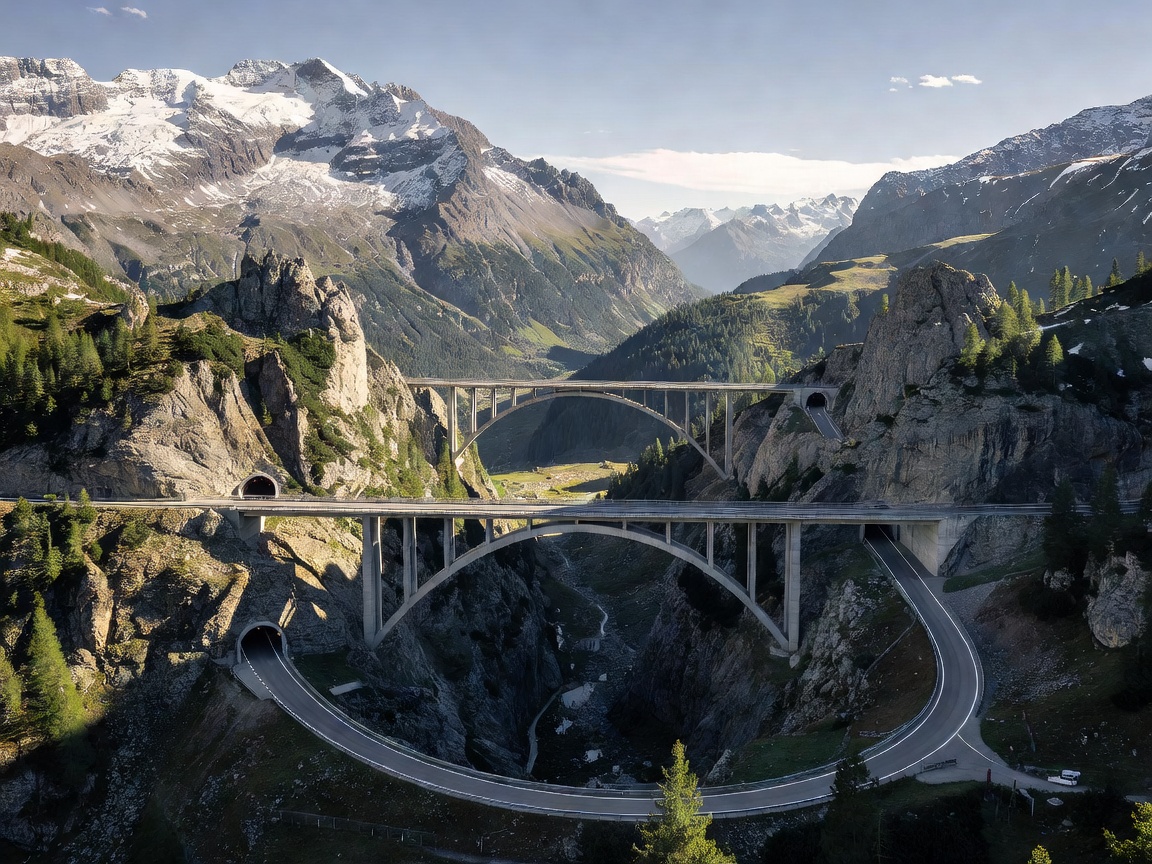
Alpine Passes & Tunnel Envelopes
Transiting the Alps or Pyrenees requires thorough tunnel profile checks. Curved tunnel arches can pinch upper flybridge clearances even when center-lane vertical clearances appear adequate.
Primary European Transit Corridors
Overland vessel logistics across the continent generally follow three dominant corridor routes:
1. The Atlantic / English Channel Corridor
Connecting the United Kingdom, Northern France, Belgium, and the Netherlands. For vessels crossing between the UK and continental Europe, customs procedures apply. Transit documentation (T1), proof of VAT status, and temporary admission declarations must be coordinated prior to port arrival at Dover, Calais, or Dunkirk. Specialized Ro-Ro ferry bookings require certified trailer lashing eyes.
2. The North-to-South Mediterranean Transit
Connecting the North Sea and Baltic basins to Mediterranean ports in France, Spain, and Italy. The primary route traverses the French motorway network via the Rhône Valley corridor (A6/A7). This corridor features frequent toll plazas (péages); wide-load trailers must use designated oversized manual toll lanes on the extreme right, as automated telepass lanes are too narrow.
3. The Central & Eastern European Artery
Connecting Germany and Austria with northern Adriatic harbors such as Trieste, Venice, and Koper. This passage involves steep gradients and heavily regulated Alpine tunnels (such as the Brenner corridor or Tauern network). Oversized boat movements require pre-approved transit slots, often restricted to night-time windows to prevent civilian traffic congestion.
Ferry Connections & Island Deliveries
Routing vessels to islands such as Mallorca, Menorca, Corsica, Sardinia, or the Greek archipelago requires linking highway transport with maritime freight carriers. Ferry lines enforce strict requirements regarding empty domestic gas canisters, fuel vapor venting certificates, and total combination lengths, including tractor unit and trailer overhangs.
No Single European Permit Exists
Do not assume a road permit issued in Belgium or the Netherlands authorizes passage across the border into France or Germany. Each nation maintains its own transport ministry, police escort criteria, and toll fee structures. Multi-country passages must be planned as individual national legs linked seamlessly together.