When a vessel operates on the water, waves and swell are cushioned by hydrostatic buoyancy. On European motorways, however, a hull experiences sustained low-frequency vibration, sudden expansion joint shocks, and sustained 90 km/h wind shear. Preparing a boat for overland haulage requires disciplined decommissioning that bridges maritime seamanship and heavy freight cargo security.
General Preparation vs. Specialized Marine Engineering
Vessel preparation tasks should be divided clearly between what the owner or crew can complete and what requires certified marine yard technicians:
- Owner / Crew Tasks: Clearing personal cruising gear, securing galley supplies, latching cabin doors, emptying fresh water lines, locking seacocks, and taping forward-facing deck hatches.
- Specialist Engineering Tasks: Unstepping carbon or aluminum spars, de-tensioning standing rigging without warping turnbuckles, disconnecting propulsion couplings, dismounting radar arches, and isolating high-capacity lithium battery banks.
Exterior Decommissioning: Managing Aerodynamic Drag
Any loose canvas or deck gear exposed at motorway speed creates severe wind drag. Air entering beneath a bimini or sprayhood can tear canvas seams and distort stainless steel stanchions.
- Canvas & Clears: Completely remove all dodgers, biminis, sprayhoods, sail bags, and exterior cockpit cushions. Store them dry inside the interior cabins.
- Sensors & Superstructure: Dismount VHF whip aerials, radar radomes, satellite domes, and wind speed transducers if they add to overall transport height or face direct air buffeting.
- Ground Tackle: Remove the primary bow anchor or secure it through the shank with steel locking pins. Never rely on an electric anchor windlass brake alone while travelling highway roads.
- Deck Hatches: Latch all deck lights and companionway washboards securely. Apply heavy-duty marine tape along leading edges of forward-facing hatches to prevent wind infiltration.
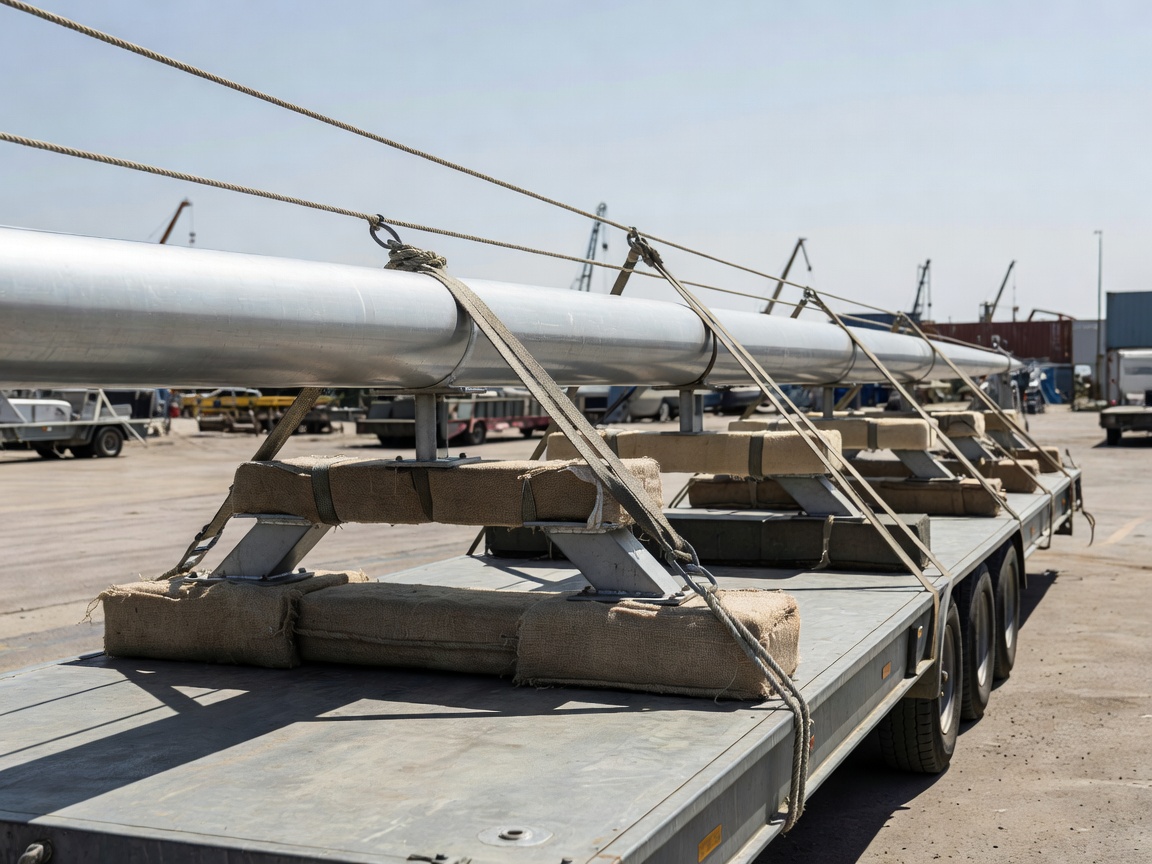
Mast & Spar Securing
Spreaders must be removed and taped to the spar with protective closed-cell foam. Standing rigging should be coiled and lashed along the mast extrusion, avoiding kinks in wire or rod rigging.
Interior Cabin Preparation & Liquid Management
Inside the boat, road movement will cause loose equipment to tumble. Unsecured tools or galley gear sliding across polished teak cabin soles will gouge finishes within thirty kilometers of rough highway:
- Drain Liquid Storage: Holding tanks and graywater sumps must be pumped clean at the marina pump-out facility before haul-out. Drain freshwater tanks to reduce transit weight and protect internal baffles from liquid surge fatigue.
- Fuel Tank Capacity: Keep fuel at minimum operational levels (typically 10% to 20%) to comply with international road transport safety regulations and lower axle weights.
- Battery Bank Isolation: Turn off all battery master switches. For cross-continental journeys, physically disconnect starter and house battery terminals to eliminate short-circuit fire risks.
- Cabinetry & Lockers: Secure push-button cabinetry latches with tape or ties. Centrifugal forces encountered on roundabouts easily force open spring-loaded catches.
Photographic Baseline Documentation
Before yard slings lift the vessel and before trailer cradle pads contact the hull, conduct an exhaustive photographic walk-around. Capture high-resolution, time-stamped images in clear daylight:
- Boot-top, waterline, and underwater profile showing pre-existing anti-fouling condition and gelcoat status.
- Propeller blades, shaft brackets, rudder bearings, trim tabs, and transducer skin fittings.
- Rub rails, stanchion bases, cleats, and pushpit welds.
- Interior cabinetry joinery and deckhead headliners to verify absence of pre-existing stress cracks.
Shrink-Wrap Caution
Shrink-wrapping a hull for road haulage requires proper ventilation louvers. Without adequate airflow, trapped moisture creates interior mold during transit. In addition, loose plastic sheeting flapping at motorway speeds will scour gelcoat down to fiberglass within hours; wrap seams must be taped tight with foam buffers beneath straps.